Tracking State Legislation to Get Politics Out of Utility Bills

Since 2023, 22 states* have filed legislative or regulatory proposals to prohibit investor-owned utilities from using customer funds to support political activities. Three states enacted the provisions in 2023 – Colorado, Connecticut, and Maine. In Colorado, Xcel Energy gas customers will save at least $775,000 annually that they would have otherwise been forced to spend and more refunds may be in the works for those customers. In Connecticut, utility regulators cited the law when they denied more than $617,000 in costs Avangrid wanted to charge its customers in a rate case. Additionally, customers in Connecticut have been spared from footing the bill for up to $10 million of their utilities’ political spending on lobbying, advocacy, and advertising activities since the state passed a law prohibiting recovery of such costs.
In 2025, California enacted the Ratepayer Protection Act, which prohibited investor-owned utilities from charging customers for a range of political activities including lobbying, advertising, trade association dues, and other activities that benefit shareholders rather than customers. The law is the first such legislation that mandates that the Public Utilities Commission enforce financial penalties on utility companies that violate the law. The law also limits how much utilities can charge their customers to pay for lawyers and expert witnesses employed in rate cases, in which utilities typically ask the PUC for approval to raise customers’ rates. Strong transparency measures should help regulators and the public to track utility expenses, allowing them to pinpoint if the utilities are illegally including those activities in rates.
Last Updated: February 2026
This accountability effort comes after a season of high utility bills and customer debt, and utility scandals that have erupted across the country in recent years.
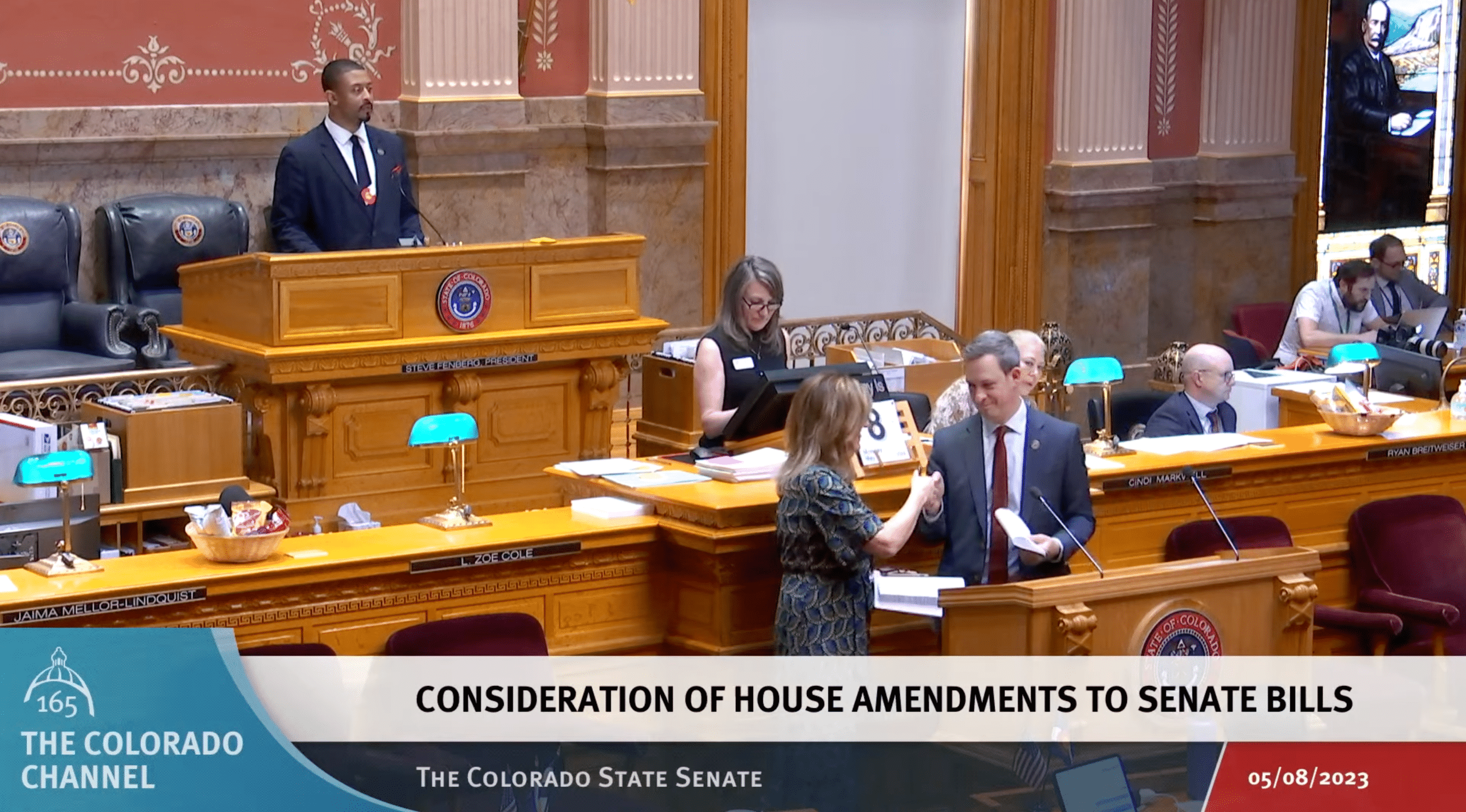
Nearly 20 million American households were behind on their utility bills last spring, owing a total of $19.5 billion. Frequent price spikes in volatile methane gas and electricity makes it harder for customers to stay current on their utility bill and pay off mounting debt. Colorado, like many states, experienced this volatility first hand last winter, when the price of gas rose by 40%, compared to the previous year. The typical Xcel customer paid 75% more on their gas bills compared to the previous year. Abnormally high utility bills and public pressure compelled Colorado Senate President Steve Fenberg and House Speaker Julie McCluskie to investigate the issue by establishing a first-of-its-kind Joint Select Committee on Rising Utility Rates.
Evidence heard in the Committee led to legislative action: Senate Bill 291, a utility reform bill that added new customer protections aimed at some of the root causes of the volatile, high utility bills. SB 291 prohibited utilities from charging customers for their lobbying and other political influence activities, charitable contributions, trade association dues, and advertising expenses, as well as other costs like gas pipeline extensions.
Following Colorado, Connecticut and Maine passed bills with bipartisan support that prohibited utilities from recovering the cost of trade association dues, education, charity, lobbying and grassroots lobbying from customers. Legislators in other states followed suit with their own efforts to pass protections that eliminate unnecessary political and other unnecessary costs from customers’ bills.
Other states have passed less comprehensive laws that prohibit only one or two categories of utility spending, without comprehensive transparency or enforcement measures. A fourth state, Maryland, included a provision in a 2025 law that prohibits utility recovery of trade association expenses and private jets. Utility trade associations, like the Edison Electric Institute and the American Gas Association, typically advocate for policies that lead to higher utility profits, often at ratepayers’ expense. Eliminating these costs from customers’ bills means utilities can’t charge customers for their political machines, which often work to block policies that would lower bills. New York enacted a similar policy in 2021. New Hampshire passed a law banning recovery of lobbying in 2019.
Delaware passed a law in 2025 prohibiting utilities from recovering the costs of lobbying, advertising, and other expenses that do not benefit customers. The law’s clause on trade associations was written in a way that will allow utilities to continue recovering most of those expenses from customers, as they currently do, and the law does not contain transparency or enforcement measures.
In the 1980s, states passed a wave of laws that prohibited utilities from recovering advertising costs from customers. Those states included Iowa, Massachusetts, Minnesota, North Carolina, Oklahoma, Pennsylvania, and Virginia. Illinois and Illinois had passed statutes to prohibit recovery of lobbying costs. These earlier laws did not include transparency or enforcement provisions, and have been sparsely enforced.
Find more information in EPI’s 2023 report Getting Politics Out of Utility Bills, and the 2024 report Power Trip: How utilities use customer money to fund lobbying, corporate branding, and luxury lifestyle expenses.
*States: AZ, CA, CO, CT, DE, FL, IL, IN, LA, ME, MA, MD, MN, NC, NH, NY, OH, OR, PA, RI, UT, and VA.